__largepreview__.webp)
The Blueprint of Grace: From Eden to the Ark
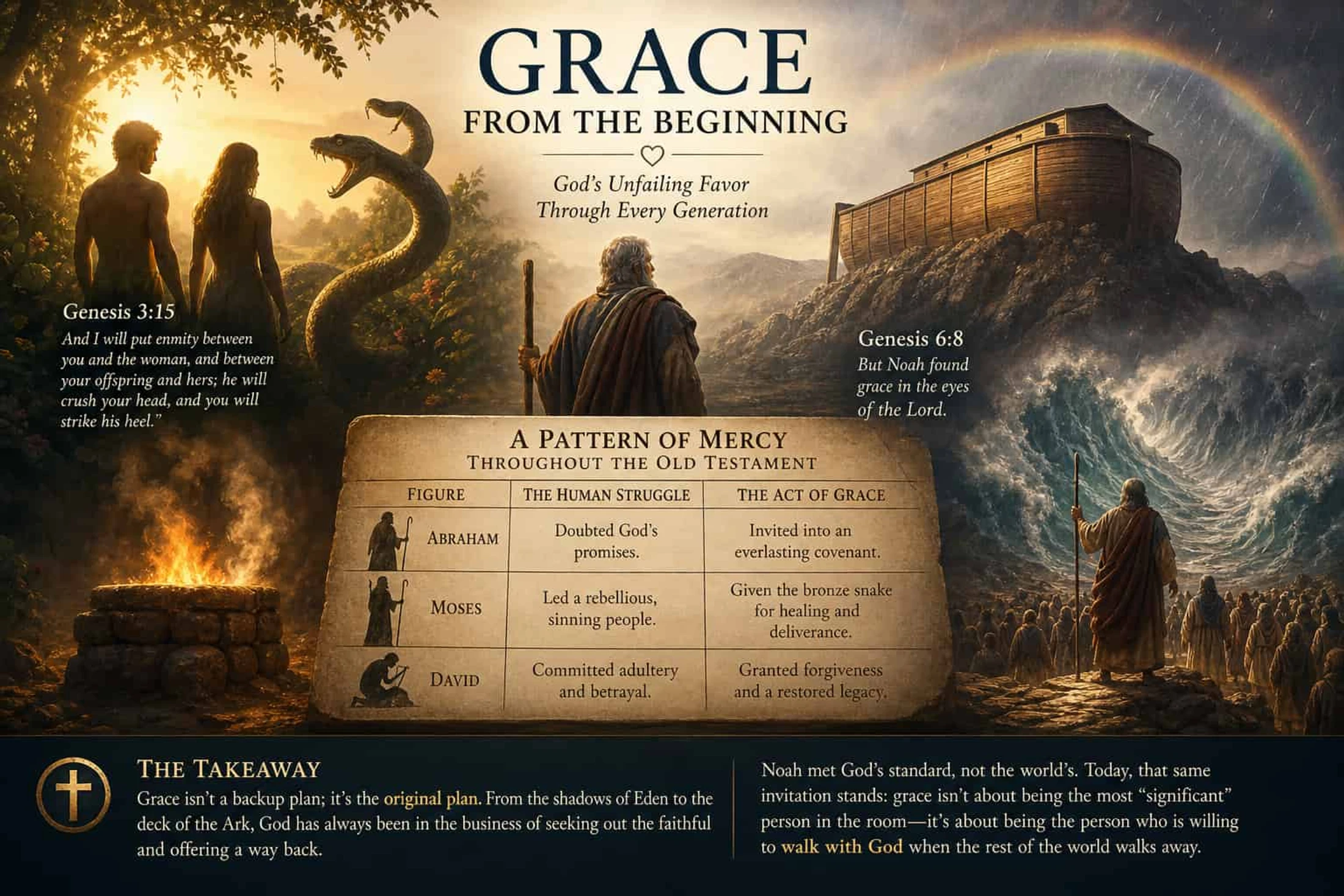
Most people think of "grace" as a New Testament concept—something that arrived only when the Gospels began. But if you look closely at the earliest pages of Scripture, you’ll find that grace isn’t just a late arrival; it’s the very heartbeat of the story from the beginning.
1. The First Spark: A Promise in the Garden
The trail of grace starts earlier than you might think. Right in the middle of the fallout in Eden, God offered a glimmer of hope.
In Genesis 3:15, God speaks to the serpent:
"And I will put enmity between you and the woman, and between your offspring and hers; he will crush your head, and you will strike his heel."
This is the first hint of the Gospel. Before Adam and Eve even left the Garden, God was already promising a future where sin would not have the final word. It was a declaration that, one day, the price would be paid and the mistake mended.
2. The First Mention: Noah’s Divine Favor
While the promise of grace began in Eden, the first time the word is explicitly used is in the story of Noah.
Genesis 6:8 tells us:
"But Noah found grace in the eyes of the Lord."
In a world drowning in corruption and wickedness, Noah stood out—but it’s important to understand why:
- It wasn’t perfection: Noah was a man of faith, but he wasn’t without sin.
- It wasn’t earned: You don’t “earn” grace—by definition, it is unmerited.
- It was positioning: Noah’s obedience and faithfulness didn’t buy God’s favor; rather, his actions positioned him to receive what God was already willing to give.
The world likely saw Noah as a “crazy man” building a massive ship in a land that had never seen rain. By worldly standards, he wasn’t powerful or significant. He became significant only because God set him apart.
3. A Pattern of Mercy
Noah was just the beginning of a long, beautiful pattern throughout the Old Testament. Time and again, we see God extending favor to those who didn’t necessarily “deserve” it by human standards:
Abraham
Doubted God’s promises.
→ Invited into an everlasting covenant.
Moses
Led a rebellious, sinning people.
→ Given the bronze snake for healing and deliverance.
David
Committed adultery and betrayal.
→ Granted forgiveness and a restored legacy.
The Takeaway
Grace isn’t a backup plan—it’s the original plan.
From the shadows of Eden to the deck of the Ark, God has always been in the business of seeking out the faithful and offering a way back.
Noah met God’s standard, not the world’s. Today, that same invitation stands:
Grace isn’t about being the most “significant” person in the room—it’s about being the person who is willing to walk with God when the rest of the world walks away.
-Rory Irwin